RV · Restoration & Ceramic Coating
RV Restoration & Ceramic Coating on the Grand Strand
Your RV's biggest enemy is the sun. UV and oxidation chalk and fade huge fiberglass surfaces that are too big — and too tall — to keep up with yourself. We restore what the coast has faded and protect it for years, at your site or storage lot.
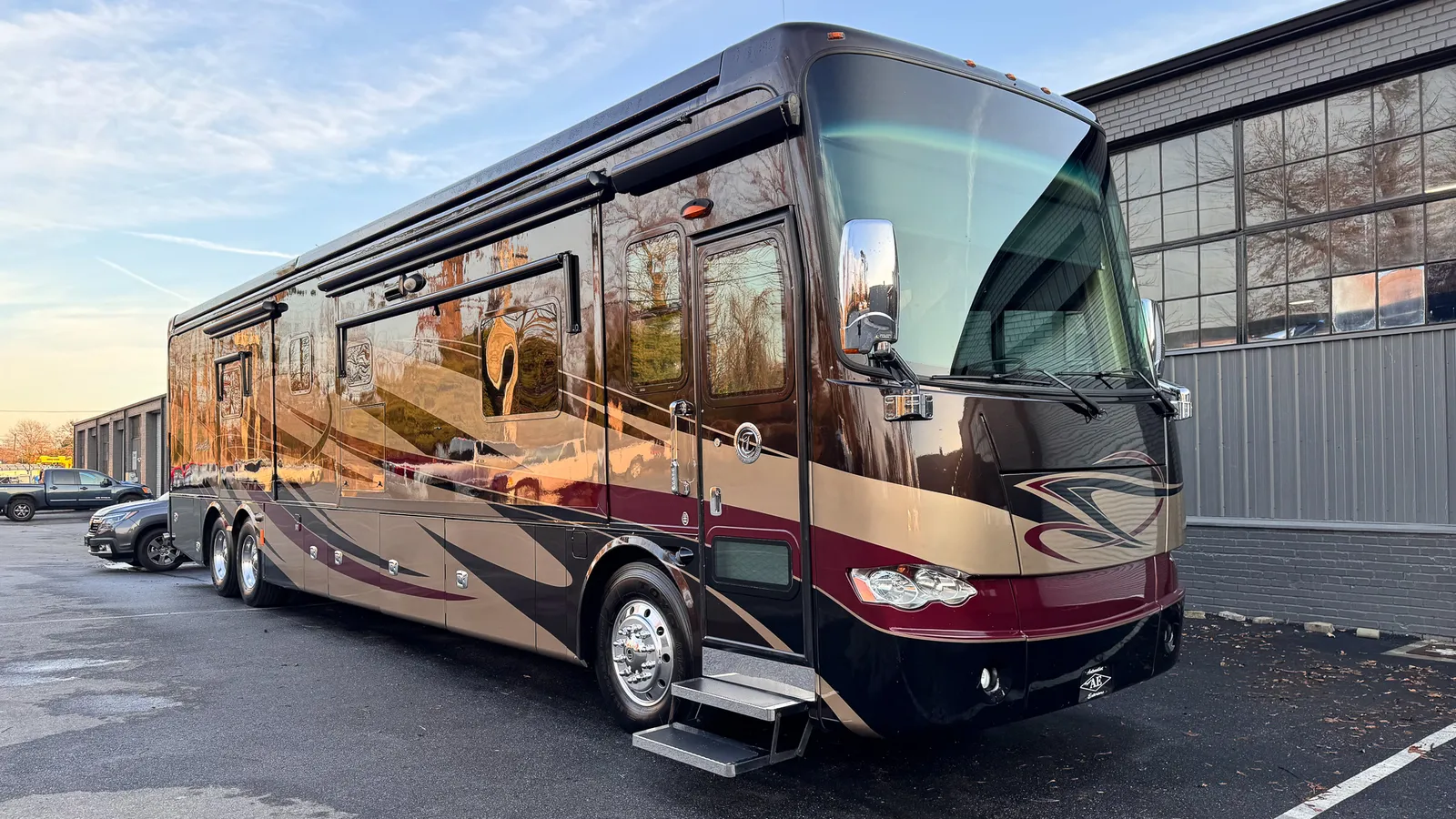
What the sun does to a coach
More surface area than anything else you own — all of it exposed.
Oxidation & chalk
UV breaks down the gelcoat surface until the sidewalls turn chalky and dull — the classic faded-RV look.
Black streaks
Runoff from the roof and seals stains the fiberglass and gets worse the longer it bonds.
Roof degradation
The roof takes the most sun of all and is the source of most streaking — and the part owners can't safely reach.
Sheer size
Too big for a bay, too tall to hand-detail safely — which is exactly why it gets neglected and why mobile pros matter.
Restore → Protect
Bring the fiberglass back, then defend it for years.
Coating faded fiberglass just locks the fade in. So we restore first — wash, cut the oxidation, treat the roof — then seal it under a multi-year ceramic and keep it that way.
01
Wash & decontaminate
Two-bucket hand wash, bug and tar removal, and decontamination across the whole rig — including the black streaks the coast and the road leave behind.
02
Remove oxidation
Compound and polish the chalky, sun-faded fiberglass back to gloss — the single biggest transformation on most coastal RVs.
03
Restore roof & surfaces
Deep-clean and treat the roof against UV, and restore faded panels and trim — the surfaces that take the most sun and are hardest to reach.
04
Coat & maintain
Seal the restored fiberglass under a multi-year RV ceramic, then keep it ahead of the sun with periodic care.
The RV menu
From a maintenance wash to a full restoration.
Exterior wash & wax
Hand wash and sealant for fiberglass — the maintenance layer for a rig that's already in good shape.
Oxidation removal
Compounding chalky, sun-faded sidewalls back to gloss. The most common — and most dramatic — coastal RV fix.
Roof cleaning & UV treatment
Deep-clean the rubber or fiberglass roof and treat it against the sun that degrades it fastest.
RV ceramic coating
A hard, hydrophobic barrier bonded to restored fiberglass — years of defense against UV, oxidation, and black streaks.
RV ceramic levels
Three levels of protection, matched to your coach and how far it's faded.
Good
Road Guard
1–2 year protection
- Prep
- Wash + decontamination
- Coverage
- Exterior fiberglass
A durable barrier for newer or well-kept coaches.
Better
UV Shield
3–4 year protection
- Prep
- Oxidation removal + decontamination
- Coverage
- Fiberglass, two layers
Our most-chosen RV level — restored sidewalls, sealed for the long haul.
Best
Tour Reserve
5 year protection
- Prep
- Full restoration + roof coat
- Coverage
- Fiberglass + roof
Maximum restoration and defense, roof included, for owners who keep their coach.
RV coatings are quoted by length and the condition of the fiberglass. We assess the coach and quote it specifically — and every coating pairs with periodic care that holds the warranty.
RV work
Coaches we've brought back.
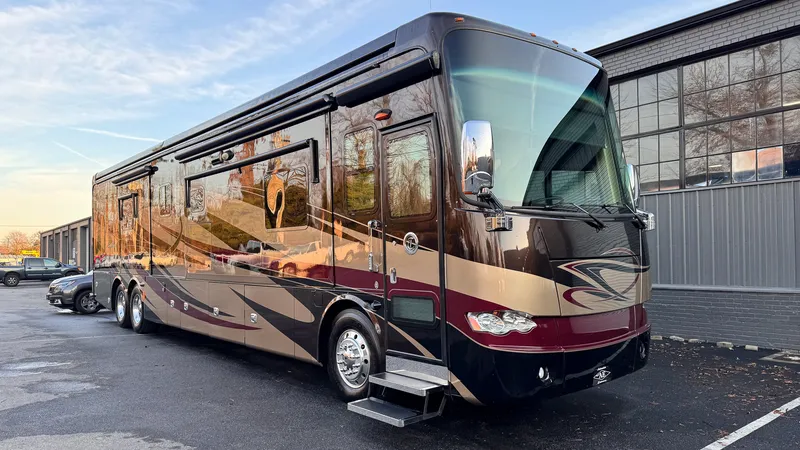
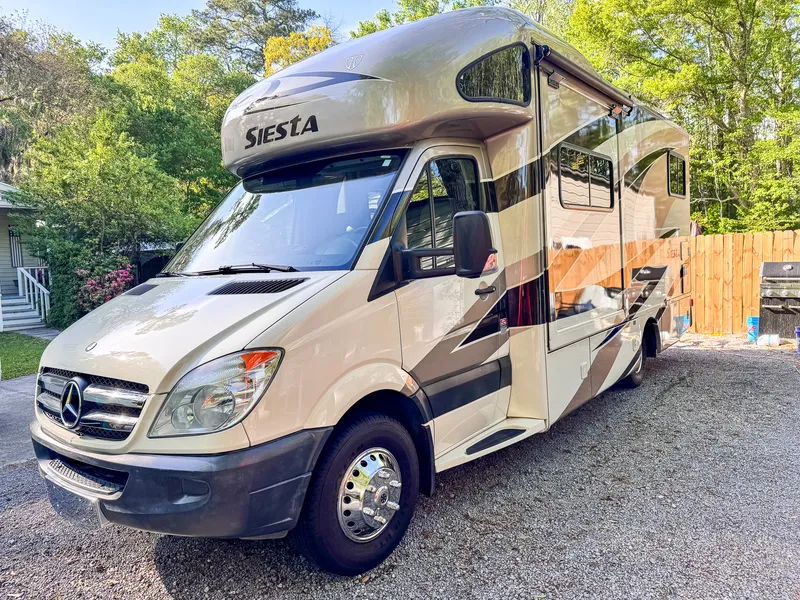
After the coating
Keep the big surfaces ahead of the sun.
A coated, maintained coach holds its finish far longer than one left to bake between trips. Periodic care is what makes the restoration and the coating last — especially on surfaces this large and this exposed.
RV restoration & coating questions
My RV's sidewalls are chalky and faded — can that come back?
Usually, yes. That chalk is oxidized fiberglass — the surface breaking down under UV. Compounding and polishing removes the dead layer and restores the gloss; heavily faded rigs may need a multi-step restoration. It's the single most dramatic improvement on most coastal RVs, and we test a section first so you can see the result before committing.
What about the black streaks down the sides?
Those come from dirt and oxidation washing off the roof and seals. We remove them in the wash-and-decontamination stage, and a ceramic coating makes them far easier to rinse off going forward instead of letting them stain the fiberglass.
Do you treat the roof too?
Yes. The roof takes the most UV and is the source of most streaking and degradation, so we deep-clean it and apply a protectant. On the top RV tier, a roof coating is included — it's where a lot of the long-term protection actually happens.
How long does RV ceramic coating last?
By tier, roughly one to five years of protection. On the coast, periodic maintenance is what keeps it performing to its full term — the sun never stops working on those big surfaces, so staying ahead of it is the whole point.
Can you do it at my storage lot or campground?
Yes — we're fully mobile and bring everything. RVs are too big for most bays anyway, so on-site is usually the only practical option. We just confirm space, water, power, and a shaded area for any coating to cure when we book.
Related protection
RV service across
Your RV's biggest enemy is the sun. Let's stop it.
Get a fast, specific quote — we'll restore the fiberglass and protect it for years, at your site or storage lot.